Embedded hardware, retail
StepPay
Shop, walk out, done.
The question it started from
What if walking out of the shop was the checkout?
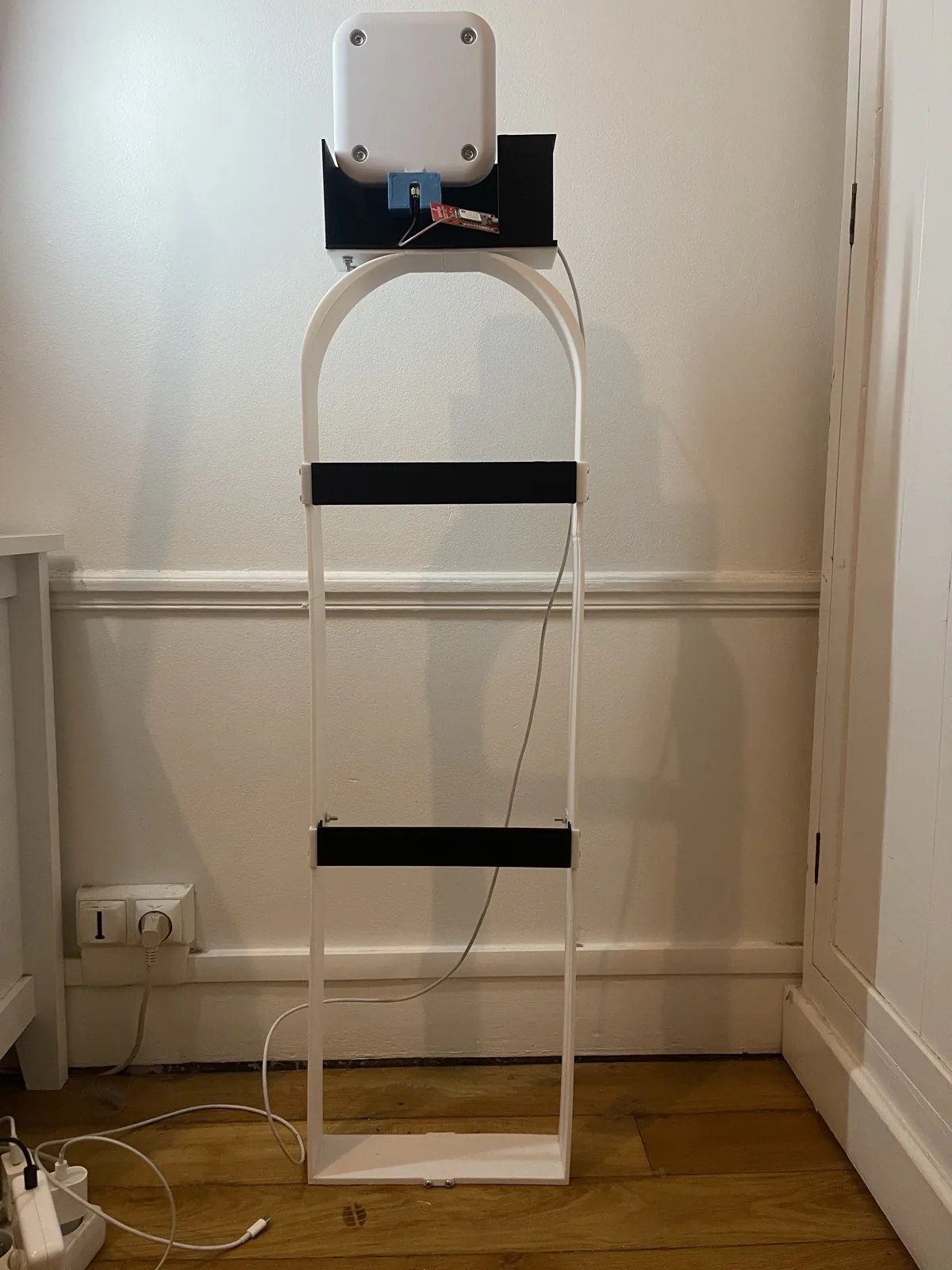
One post standing in a room, plugged in: the antenna on its printed mount, the reader behind it. 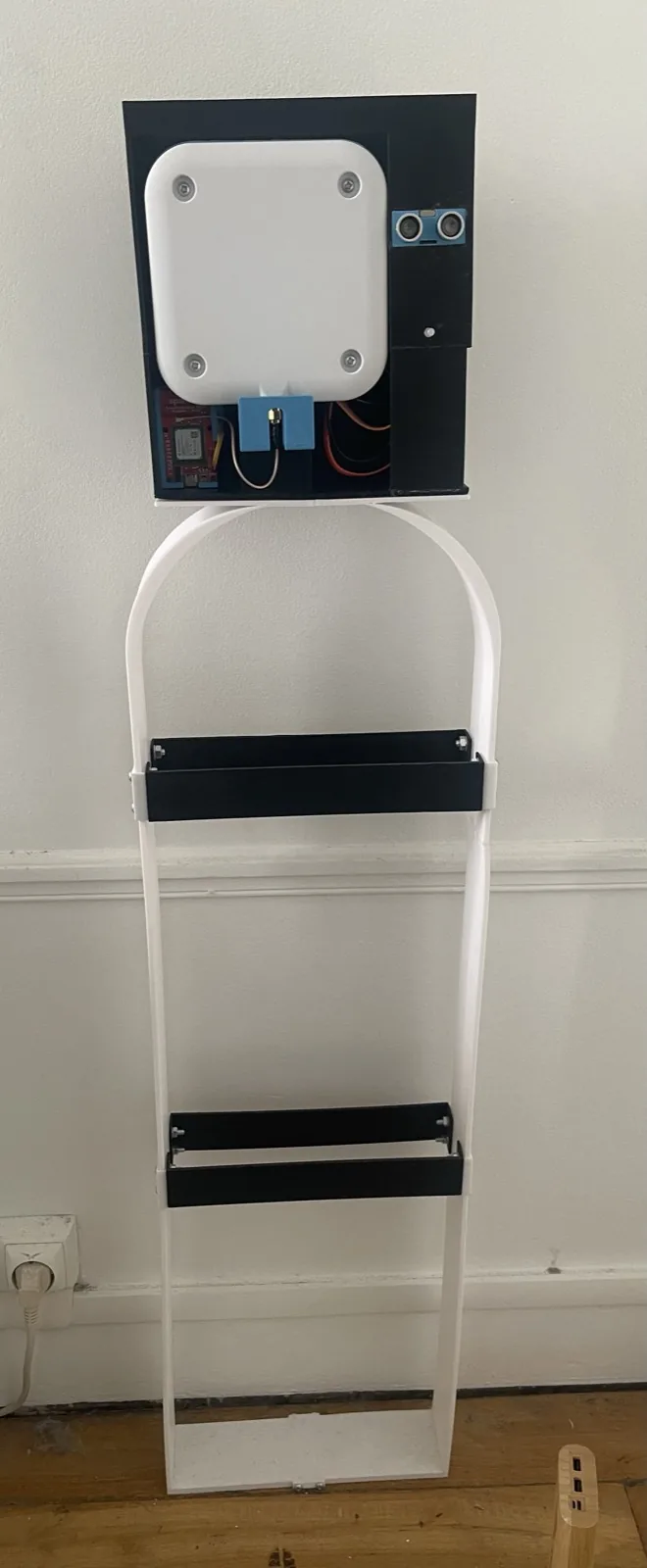
The same post against a wall — the reader head on top of the printed frame. 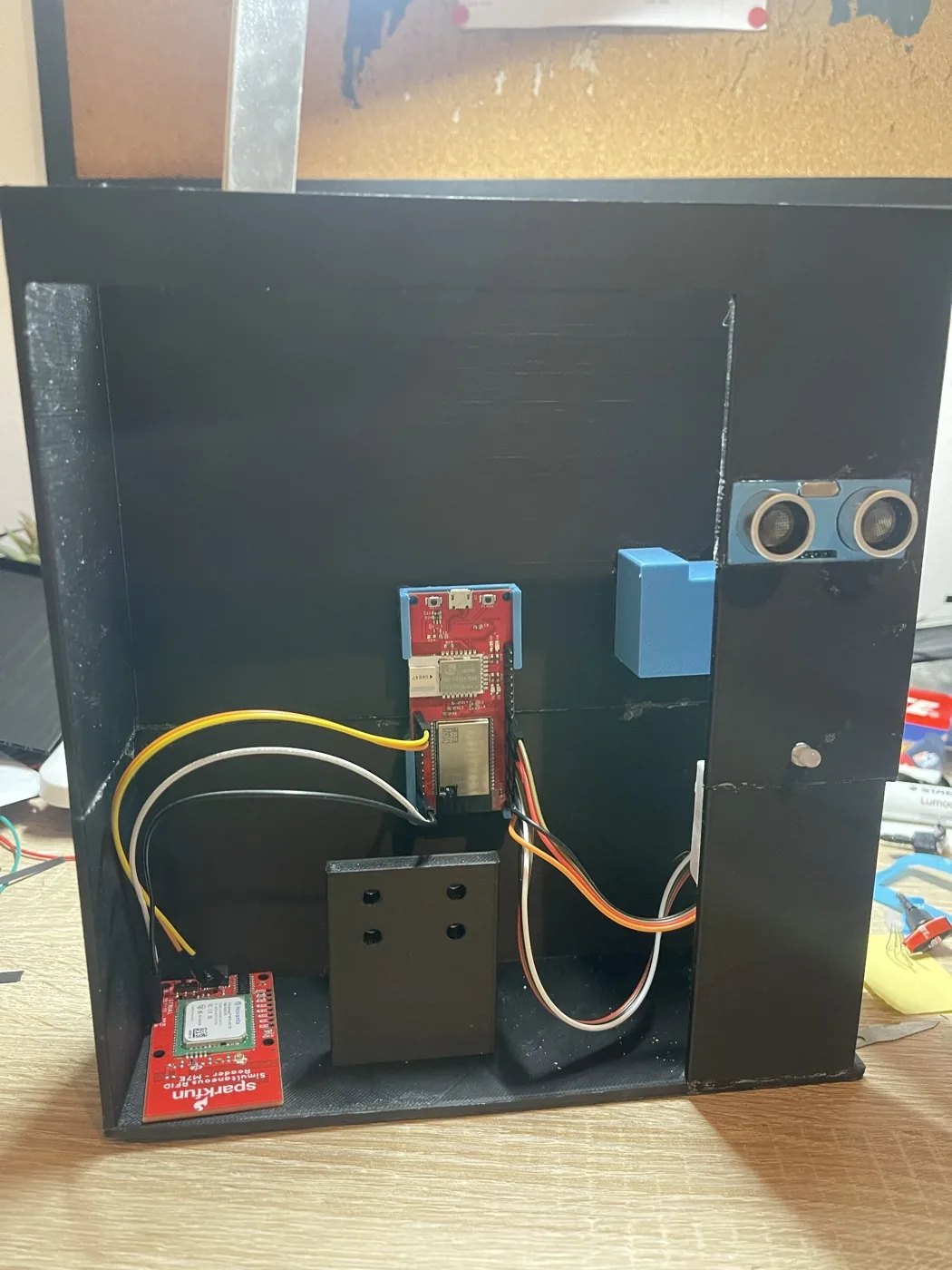
The open enclosure: the RFID reader bottom left, the microcontroller in the middle, the ultrasonic sensor set into the right-hand face. 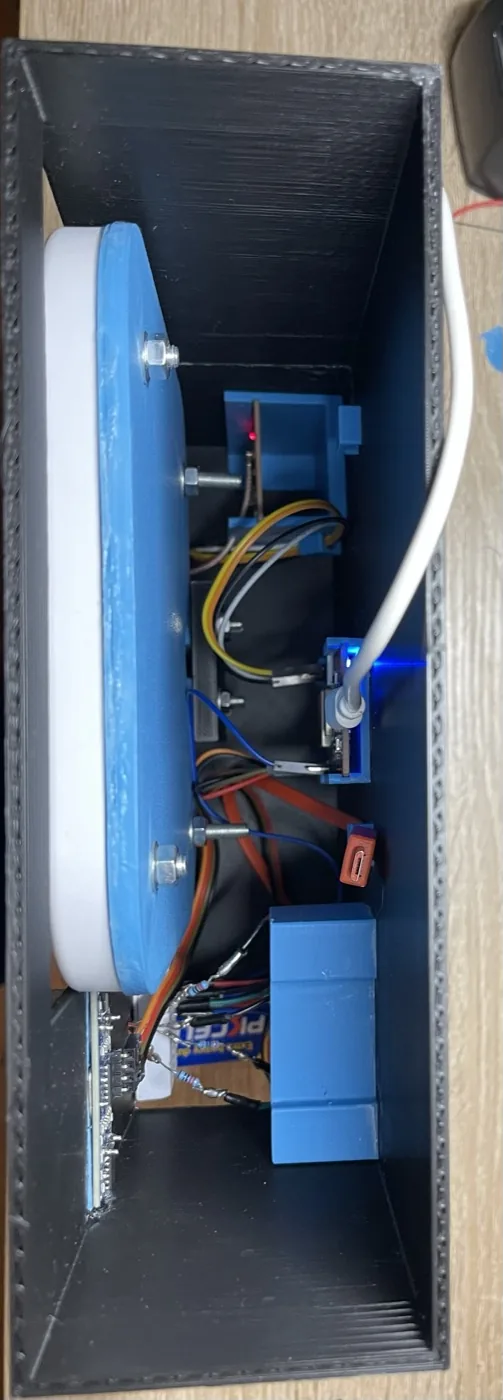
Side view: the antenna plate raised on standoffs above the wiring and the printed brackets. 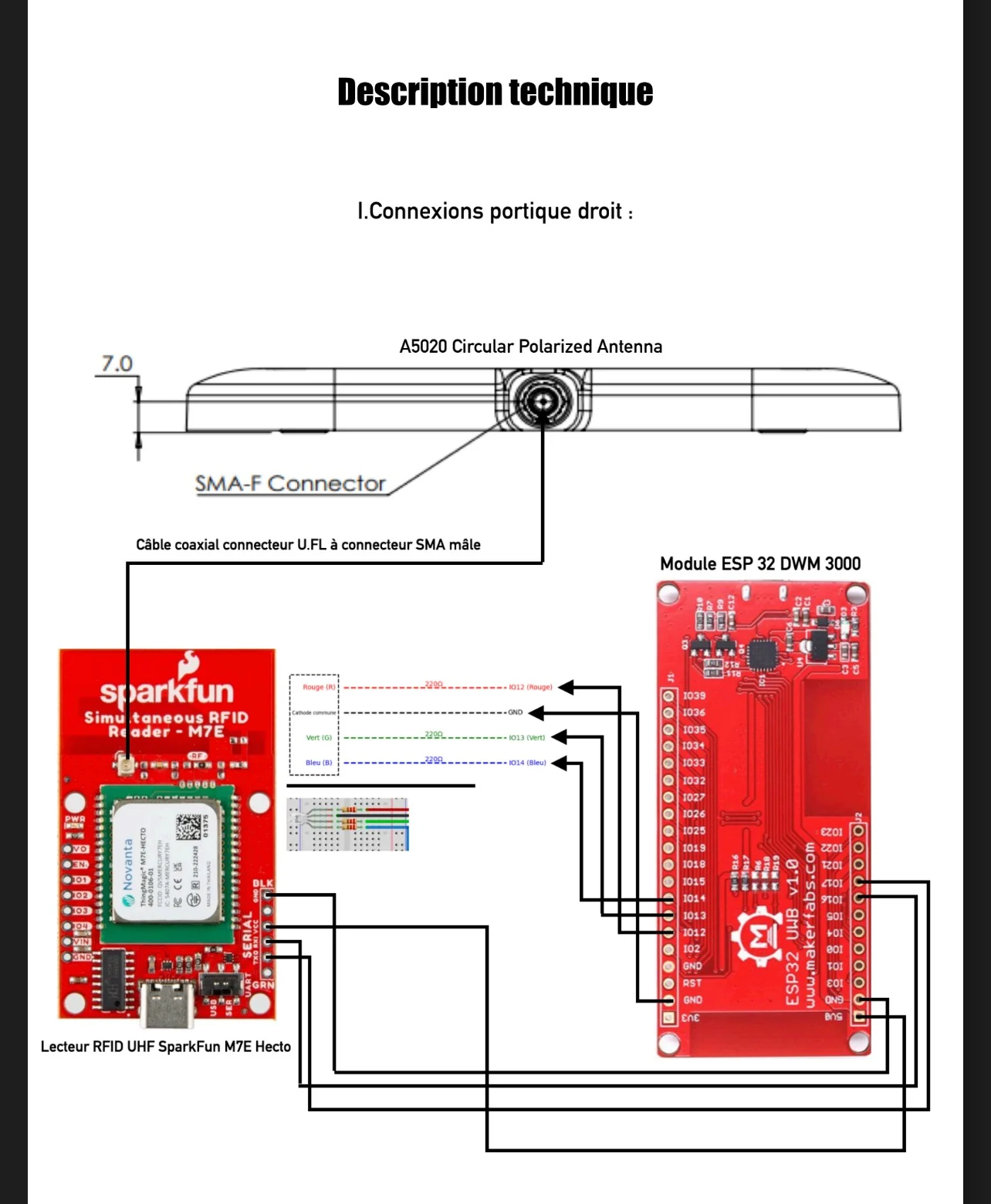
The wiring of the right-hand post: A5020 antenna, M7E Hecto reader over UART, ESP32 + DWM3000, and the RGB status LED through its 220 Ω resistors. 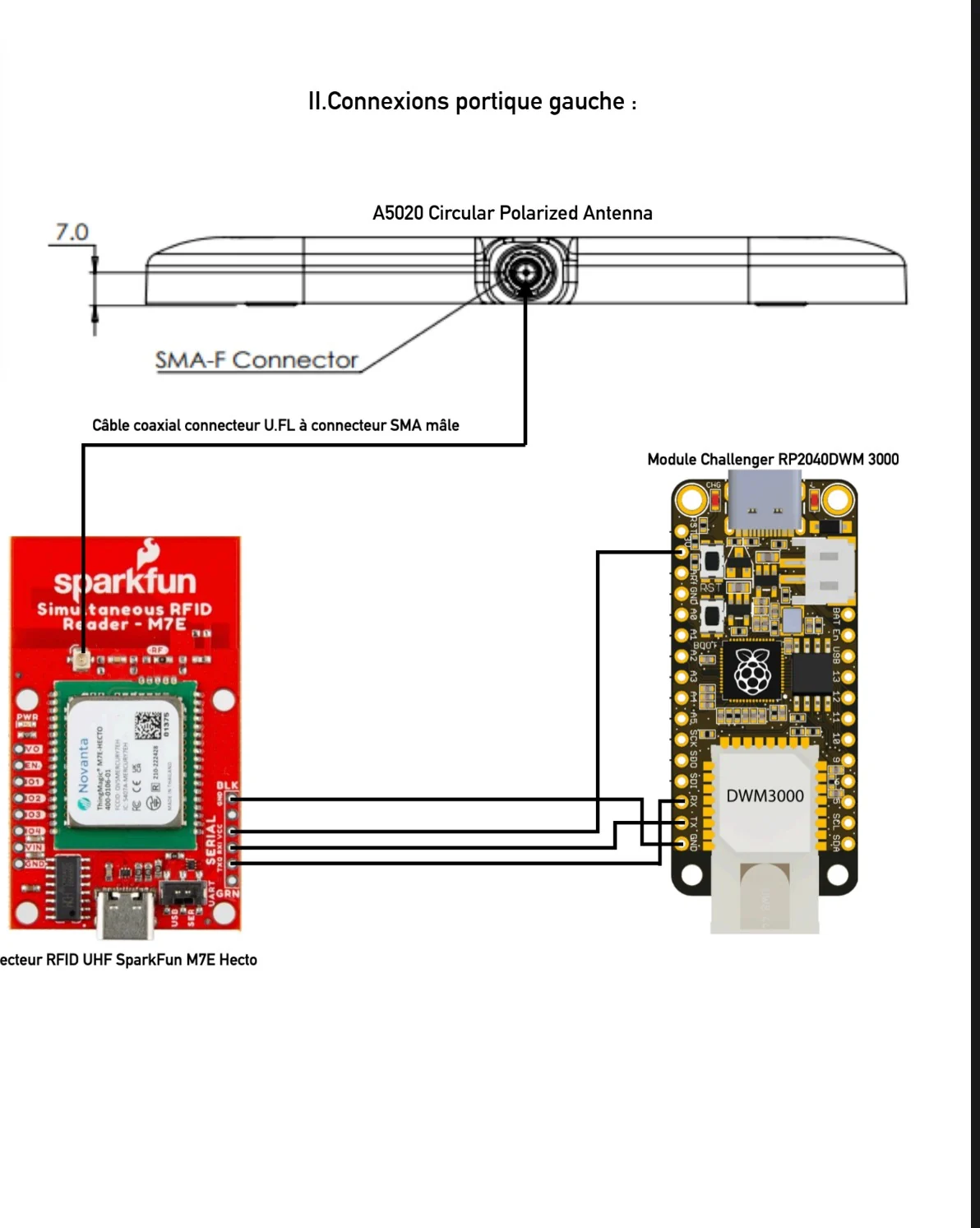
The left-hand post: the same antenna and reader, against a Challenger RP2040 carrying its own DWM3000.
The problem
Checkout is the part of shopping everyone endures and nobody wants. You have finished choosing, and the shop makes you queue to hand over what you already decided to buy.
The usual answer, a self-checkout, does not remove the step — it hands the work to the customer and keeps the queue.
The idea
Put the till in the doorway. Tag the products, and let a gate read everything a person is carrying as they leave, so walking out is the payment.
Make it two posts a shop can stand in a doorway and plug in, rather than an installation in the ceiling.
What I contributed
I built the device: the 3D-printed enclosures and standing frames, the antenna mounts, the choice of radios, the wiring of both posts, and the documentation of that wiring.
I also made the launch film — the 3D animation of the gate, the product shots and the edit.
- 01
Tag
Each product carries a UHF RFID tag instead of a barcode to be scanned.
- 02
Approach
The ultrasonic sensor notices that someone is in the doorway.
- 03
Read
Both posts read every tag going through at once. This part works.
- 04
Basket
What was read becomes what the person is taking. Not built.
- 05
Done
They keep walking and the payment happens by itself. Not built.
What exists today
- A gate of two posts, left and right, each in a 3D-printed enclosure on a printed standing frame.
- An A5020 circularly polarised UHF antenna per post, fed from the reader through a U.FL-to-SMA coaxial cable.
- A SparkFun Simultaneous RFID reader per post — a ThingMagic M7E Hecto, which reads many tags at once rather than one at a time. That is the whole point when somebody walks through carrying a basket.
- Ultra-wideband radios on both posts: an ESP32 with a DWM3000 on the right, a Challenger RP2040 with a DWM3000 on the left, so the two sides can range against each other across the doorway.
- An RGB status LED driven from the ESP32 through 220 Ω resistors, so the gate says out loud what it is doing.
- An HC-SR04 ultrasonic distance sensor in the front face.
- Wiring diagrams for both posts, drawn properly rather than kept in my head.
- A launch film: a 3D animation of the gate, ending on the promise it makes.
What is left to build
- Everything after the read. The gate detects tags — that is where I stopped. Nothing charges anybody: no basket, no payment, no account.
- Which means the hard commercial questions are untouched: what happens when a tag is missed, when someone walks back in, when two people cross at once.
Next
Mini Air